
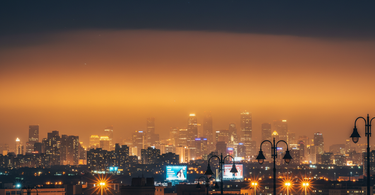
We don’t usually think of darkness as something that should be protected. Well, we have arrived at this stage. And it’s a big shift.
We’ve always seen light as something good – and for the longest time, that was the case. It’s literally revolutionised the entire world. Safer streets, productive workplaces, and homes that can easily stay (and feel) active long after sunset.
Darkness, by contrast, has always been the exact opposite of that. Something to be feared.
No wonder artificial light has quietly changed everything. Streets glow long after traffic disappears. And so do office buildings – even with no one inside. Our bedrooms are never fully dark.
And because none of this feels immediately harmful, it goes completely unnoticed. It’s not like soil pollution or water pollution. Awareness is the key difference here.
We just accept that the light is everywhere, all the time. That’s just the way it is – and the way it’s supposed to be.
Or is it?
The issue is that our bodies – and much of the natural world – still operate on rules set long before permanent illumination existed. When night stops being dark, those systems start to strain.
Sleep becomes lighter. Rest gets harder. Wildlife behaviour shifts. Energy use climbs. And slowly, almost imperceptibly, we lose something that used to come free: a clear distinction between day and night.
And that's much more serious than we realise.
What Does Light Pollution Mean?
Light pollution is one of the 5 main pollution types, and it refers to the excessive, misdirected, or inappropriate use of artificial light. It occurs when light is used in places, at times, or in ways that interfere with natural darkness. Much like noise pollution, it hardly ever gets any serious attention.
There’s an important point to be made here. Light pollution is not about removing lighting altogether. It is about finding balance – by design. Well-planned lighting improves safety and comfort. Poorly planned lighting spills into the night sky, into bedrooms, and into ecosystems that rely on darkness to function.
Types of Light Pollution
Researchers and environmental organisations generally divide light pollution into several overlapping categories:
• Skyglow – the brightening of the night sky over towns and cities, caused by artificial light scattering in the atmosphere
• Light trespass – unwanted light entering spaces such as homes or gardens
Together, these forms of light pollution significantly alter natural light–dark cycles, especiallyin densely populated areas. The rule behind all of this is pretty simple – you shouldn’t need sunglasses at night.
Main Sources of Light Pollution
Light pollution, like most pollution types, is primarily the result of human activity. However,in most cases, it is unintentional. It’s less about individual light sources – and more abouttheir cumulative effect.
Street Lighting

Streetlights are one of the most significant contributors, especially when fixtures are unshielded or poorly angled. And that happens a lot, unfortunately. Light that shines upwards or sideways serves no practical purpose. It does, however, contribute directly to skyglow and glare.
In recent years, LED lighting has been all the rage. And it has done a lot of good, like improving energy efficiency. Environmental outcomes are a slightly different story.
Cool, blue-rich LEDs are particularly disruptive, as they scatter more easily in the atmosphere and have a stronger impact on circadian rhythms. Some studies suggest that the colour does not really matter – they all increase the impact on environmental light pollution.
Commercial Signage and Advertising
Illuminated signs, billboards, and digital displays are almost everywhere, and usually are onthroughout the night – doesn’t matter if there’s anyone on the street. Also in urban centres, clusters of signage create visual clutter and contribute heavily to night-time brightness.
Excessive Indoor Lighting
Light pollution does not stop at the front door. Bright indoor lighting, especially when we use it late into the evening, spills out through windows and adds to the overall ambient brightness. Offices left fully lit overnight, and residential lighting that mimics daytime intensity both play a role. That’s not something we usually think about.
How Artificial Light Affects Sleep & Wellbeing
The entire human biology evolved in sync with the natural cycle of daylight and darkness – even the pre-industrial segmented sleep. Artificial light, particularly at night, interferes with this system in ways that are subtle but significant.
Circadian Rhythm Disruption
The circadian rhythm is our body’s internal clock. It regulates sleep, hormone production, digestion, and mood. Exposure to light after sunset — especially blue light — suppresses the production of melatonin, the hormone that signals the body to prepare for sleep. And that sets up our entire recovery system for failure.

Studies show that over time, this disruption can lead to:
Even relatively low levels of light can have an effect. Not a good one. Street lighting enteringour bedrooms, glowing electronics, or overly bright bathroom lighting late at night all contribute to circadian disturbance.
Long-Term Health Implications
A growing body of research suggests that chronic circadian disruption may be linked to broader health issues, including cardiovascular disease, metabolic disorders, and mental health challenges. Light pollution alone is rarely the sole cause, but it acts as a constant background stressor in our environment. This is particularly relevant in cities, where true uninterrupted darkness is often nowhere to be found.
Environmental Impact of Light Pollution
While the effects of light pollution on people are becoming more widely discussed, its impact on wildlife and ecosystems is just as significant — and often even more immediate.
Many species rely on darkness to survive. Artificial light changes their behaviour, feeding patterns, migration routes, and reproductive cycles. It can lead to the following:
In coastal areas, artificial lighting can disorient hatchling sea turtles – they get confused and head towards land, not the sea.
In forests and wetlands, altered light conditions can change entire food chains.
The result is a quiet but significant shift in ecosystem balance. Not something to be taken lightly.
Light Pollution - Changes at Home
One of the most encouraging aspects of light pollution is that it is actually highly reversible.
Unlike chemical pollution, the only problem is too much light. If it goes away – so does the issue.
The home is often the most practical place to start. But we can’t just live without the light.
So, what should we do? We won’t keep you in the dark for much longer.
Better Lighting Choices
It’s better to go for warmer, lower-intensity lighting for evening use as this helps support natural sleep cycles. Task lighting, instead of general overhead lighting, takes away thatunnecessary brightness and improves our comfort.
And it’s not just about lamps. Natural materials can play a quiet role too. A soft organic cotton loop bath mat, a bamboo towel, a stone bath mat, or other soothing textures create an environment that feels much calmer. And that makes recovery and relaxation better.

Bathrooms, as per usual, are often overlooked. And it’s a shame, really, because harsh lighting late at night can be especially disruptive, even during those short visits.
Outdoor Lighting Adjustments
Outdoor lighting should be purposeful and contained. Motion sensors, downward-facing fixtures, and lower brightness levels all reduce unnecessary illumination.
Rather than floodlighting our gardens or driveways, targeted lighting improves visibility without adding to the issues of skyglow or light trespass.
Reducing Evening Light Exposure
Our daily habits matter as much as fixtures. Dimming lights after sunset, limiting screen use before bed, and creating a clear distinction between day and night indoors all support better sleep.
Simple choices – such as switching off unnecessary lights and embracing darker evenings – make a real difference over time.
Conscious Consumption & Light Pollution
Light pollution is closely tied to energy use and consumption patterns. The more light we use, the more energy we consume — often unnecessarily.
To reduce it, we don’t really have to take any drastic action or turn our lives upside down for the sake of the planet.
Our best weapon is simply awareness, with some restraint. And better design.
What can we do? Nothing special, try:
At a broader level, community awareness and policy play a crucial role. Many councils are now adopting dark-sky-friendly lighting standards, dimming streetlights during low-traffic hours, and reassessing commercial lighting regulations.
There are already quite a few sites in the UK that follow these standards – but they’re mostly National Parks, like the Yorkshire Dales, which has the status of an official International Dark Sky Reserve. These places do need and deserve special care and attention – but perhaps it’s time to have some in place for residential areas as well. Of course, all within reason.
Lights Out
We’ve spent so long chasing light that we’ve forgotten how valuable darkness can be. But night isn’t our enemy – it’s a pause, a reset, a moment of recovery.
Protecting darkness at home is really simple. If we just turn the lights off when we don’t need them, that’s already a big win.
So tonight, maybe dim a few lights, look up at the sky, don’t allow phones anywhere near your bed – and let the night be the night. Quiet, calm – and dark again.
