
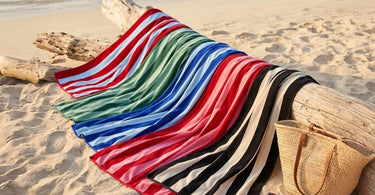
Most beach towels in a shop look almost the same - the patterns, the same "100% cotton" label, prices anywhere between eight pounds and forty. None of that tells you if it’s going to pass the test and deliver what you actually need. The beach towel needs to do a very particular job.
The right beach towel comes down to what you’re lying on, not where you’re lying - soft sand does some of the cushioning for you; a rocky cove, a shingle beach, or a lounger by the pool don't.
And while GSM (grams per square metre) is also an important indicator, it is only one part of the story. Fibre quality, weave, construction and finishing all influence how a towel performs.
Why Material Matters
Premium cotton remains the benchmark for comfort thanks to its natural softness, absorbency and durability.
Certified organic cotton beach towels offer the same luxurious feel while giving buyers confidence that the fibre has been produced to recognised environmental and social standards through schemes such as GOTS.
Microfibre towels are typically made from polyester and polyamide. Some are manufactured using recycled plastic bottles, reducing virgin plastic use.

Their advantages are clear: they are lightweight, compact and dry quickly, making them popular with backpackers and frequent travellers.
However, many people prefer cotton because it feels softer, provides more cushioning when lying on sand or sun loungers, and offers a more natural feel.
Synthetic textiles may also shed microplastic fibres during washing, something environmentally conscious shoppers may wish to consider.
The best material for your beach towel will of course depend on your priorities, so we'll leave that decision in your hands. Whether it's a case of comfort or simply how much space you have left in your suitcase, there are different options for different needs.
What You're Lying on Changes What You Need
Soft sand in the Algarve gives a towel some help - the ground itself has give in it. A rocky cove in Croatia, a shingle beach in Cornwall, or a sun lounger by a cliff-top pool don’t provide the same comfort.
Where there's nothing soft underneath, the towel is doing all the cushioning on its own, and a thin microfibre sheet has almost nothing to give.

That's why GSM is not just a mysterious number on the label, but the actual comfort layer between you and whatever you're lying on.
GSM as cushioning, not just absorbency
On soft sand at the seaside, a thinner towel still feels fine, because the sand's doing some of the work.
On rock, shingle, or paving around a pool, GSM is the main thing standing between you and the surface - 450–550 GSM terry has enough loft to genuinely soften something firm underneath you; under 350 GSM, you'll most likely feel every pebble through it, offering a little more comfort and protection for your body.
Size and weight
Anything under 90 x 180cm can start to feel restrictive, especially when two adults are trying to share it; at that point, many towels become more suitable for drying off than genuine lounging.
Bigger is better for that, but heavier isn't automatically better for packing - a dense 600 GSM terry towel is plush and absorbent, but it also takes up a bit more space.
On soft sand specifically, a looser weave will pick up more fine grit over a trip than most people expect (our materials guide covers the weave-and-sand mechanism in full, if you want the detail).
Understanding GSM
GSM measures the weight of the fabric rather than its quality, but it gives a useful indication of thickness.
-
250–350 GSM - Lightweight beach towel which is compact and easy to pack. Thin beach towels are best where portability and quick drying are priorities.

- 380–420 GSM - Good everyday quality with a balance between comfort and packing space when filling up your beach bag, still a good option if you're packing light.
- 450–550 GSM - Premium beach towels that are highly absorbent, offer excellent comfort, and impressive durability without becoming overly bulky.
- 600+ GSM - Luxury, thicker towels with exceptional plushness, often better suited to poolside or spa use than frequent travel.
Remember that two towels with the same GSM can actually feel very different depending on the quality of the cotton, the yarn and the weave.
How Often You Need It Dry Again
A short trip close to home presents a different challenge from two weeks away, regardless of what's underneath the towel.
It isn't sitting in a hot suitcase for a fortnight - it's getting wet, going in the car, and needing to be air dry again before the next outing, sometimes within the same day.
Bamboo towels may have a slight edge here: the fibre's natural structure holds less residual moisture than pure cotton terry, so they dry a shade faster and pack down smaller in a car boot or rucksack.
That's less to do with looking "eco" and more to do with the actual physics of the fibre. But there are a lot of additional factors at play here, and the “bamboo” label doesn’t automatically mean it’s more absorbent - there are many different types of bamboo fabric.
Packability and drying speed count for more the more often a towel comes in and out of use, which is exactly what a weekend away or a run of local day trips does to it. A towel that takes two days to dry on a radiator isn't much use if you're back at the coast tomorrow.
Poolside Is Where Looks Actually Do Matter
Poolside use is the one context where aesthetics probably matter more than anywhere else. Of course, cushioning and comfort do, too - you're usually on a lounger, not the ground, laying the towel out somewhere visible, probably for hours, probably in photos.
The striped beach towel is an absolute pool classic for a reason: the cabana stripe hides sun cream marks, chlorine splashes and general wear far better than a plain block colour, which is why it's stayed the default at hotel pools for decades.

Feel matters more here than it does on sand, too.
A pool towel against a sun lounger sits directly against skin for longer stretches, so a thin, rough weave gets noticed fast.
And because a poolside towel gets more use across a whole season than a once-a-year holiday towel, it needs to hold its pile and colour through far more washes than a single trip abroad would ever put it through.
What the Label Should Actually Tell You
Most of the useful information on a beach towel is hidden in plain sight, if you know what to read.
-
GSM (grams per square metre) - This is the single most reliable number on the label. Anything below 350 GSM will feel thin; 380–420 GSM is the sweet spot for a towel that’s absorbent without becoming cumbersome to carry; anything over 450 GSM will feel closer to a bath towel than a beach one.
-
GOTS and OEKO-TEX - These won't make a towel feel any different in your hands - GSM and weave do that work. What they actually verify is narrower and more specific. GOTS confirms the organic status of the fibre is genuine and traces it through the supply chain; OEKO-TEX Standard 100 tests the finished textile for harmful substances. Worth looking for if you care whether an "organic" claim is real, or if sensitive skin makes residual processing chemicals relevant to you - not essential otherwise.
-
"Organic cotton" in practice - An organic cotton beach towel isn't automatically softer or more absorbent than a conventional cotton towel. The organic label refers to how the cotton was grown - most organic cotton is rain-fed rather than irrigated, grown without synthetic pesticides - not how it's woven or finished. The real benefit is environmental, and it's genuine, but it won't change how the towel feels in your hand.
Worth knowing: eco towels as a label mean very little on its own. Anyone can print it. What matters is whether it's backed by actual certifications, like GOTS, OEKO-TEX, or a traceable supply chain - not the word itself.
Where Misona Fits In
Our beach towel was designed with firmer ground specifically in mind, not just soft sand.
-
It's woven from GOTS-certified organic cotton at a GSM that sits in the sweet spot for holiday use - thick enough to genuinely cushion a rocky cove or a poolside lounger, not so dense that it takes over a suitcase.
-
It's dual-sided: one face is cut velour for a softer feel against skin, the other is terry loops built to actually dry you off, and the stripe's woven into both - so it looks the same either way round, but each side is doing a different job.
-
The classic stripe design isn't just decoration either; it does the same practical job poolside (and beyond) that it's always done.
The Best Beach Towel for You
Whatever you end up buying, three things tell you more than the price tag does: GSM for how comfortable it’s going to be, the weave for how it holds up on whatever you're lying on, and certification for quality and responsibility guarantee.
Next time you're standing in front of that wall of near-identical stripes, you'll know exactly what you're looking at, and what you're paying for.
That mysterious gap between £8 and £40 won’t be that mysterious anymore.


